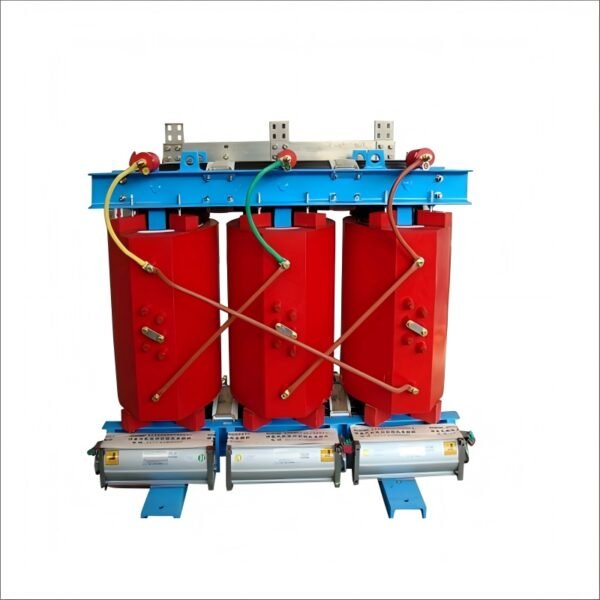
750kVA three phase Dry Type Transformer | High-Efficiency, Safe Power Solution | QIANLAI ELECTRIC
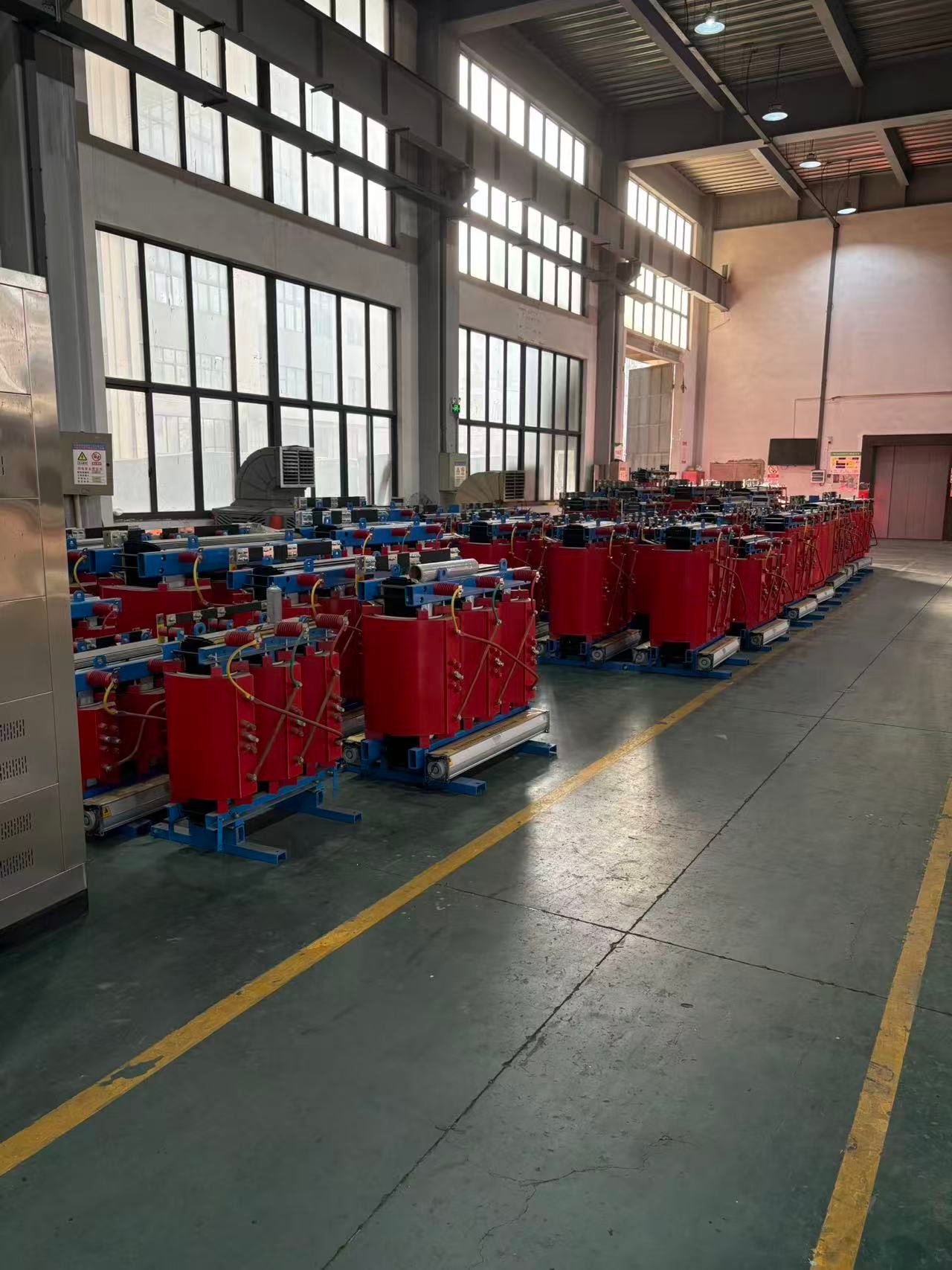
Stop Letting Unstable Power Hinder Your Production — QIANLAI ELECTRIC’s 750kVA Dry Type Transformer is engineered to be the “power core” of your industrial operations, solving voltage mismatch, interference, and safety risks with premium performance. As a leading transformer manufacturer with years of expertise, we deliver reliable, energy-efficient, and customizable solutions tailored to global
industrial needs.
SCB10 Series 750kva dry type transformer technical Specifications
| Rated Capacity KVA | Voltage KV | Vector group | No load Loss KW | Load loss at different insulation system tem.KW | No load Current % | Short Circuit Impedance % | ||||
| High voltage | Tapping range | Low voltage | 130ºC(B) (100ºC) | 155ºC(F) (120ºC) | 155ºC(H) (145ºC) | |||||
| 30 | 6 6.3 10 10.5 11 13.2 13.8 15 | ±2*2.5 / ±5 | 0.4 | Dyn11 Yyn0 | 0.19 | 0.670 | 0.710 | 0.760 | 2.0 | 4.0 |
| 50 | 0.27 | 0.940 | 1.00 | 1.07 | 2.0 | |||||
| 80 | 0.37 | 1.29 | 1.38 | 1.48 | 1.5 | |||||
| 100 | 0.40 | 1.48 | 1.57 | 1.69 | 1.5 | |||||
| 125 | 0.47 | 1.74 | 1.85 | 1.98 | 1.3 | |||||
| 160 | 0.54 | 2.00 | 2.13 | 2.28 | 1.3 | |||||
| 200 | 0.62 | 2.37 | 2.53 | 2.71 | 1.1 | |||||
| 250 | 0.72 | 2.59 | 2.76 | 2.69 | 1.1 | |||||
| 315 | 0.88 | 3.27 | 3.47 | 3.73 | 1.0 | |||||
| 400 | 0.98 | 3.75 | 3.99 | 4.28 | 1.0 | |||||
| 500 | 1.16 | 4.59 | 4.88 | 5.23 | 1.0 | |||||
| 630 | 1.34 | 5.53 | 5.88 | 6.29 | 0.85 | |||||
| 800 | 1.52 | 6.55 | 6.96 | 7.46 | 0.85 | 6.0 | ||||
| 1000 | 1.77 | 7.65 | 8.13 | 8.76 | 0.85 | |||||
| 1250 | 2.09 | 9.10 | 9.69 | 10.3 | 0.85 | |||||
| 1600 | 2.45 | 11.0 | 11.7 | 12.5 | 0.85 | |||||
| 2000 | 3.05 | 13.6 | 14.4 | 15.5 | 0.7 | |||||
| 2500 | 3.60 | 16.1 | 17.1 | 18.4 | 0.7 | |||||
Complete List of Common Faults of 750KVA Dry Type Transformer and Fault Diagnosis & Maintenance Analysis
I. Abnormal Temperature Rise of Transformers
The abnormal operation of dry-type transformers is mainly reflected in temperature and noise. If the temperature rises abnormally high, the specific treatment measures and steps are as follows:
- Check whether the temperature controller and thermometer are malfunctioning.
- Check whether the air-blowing device and indoor ventilation are in normal condition.
- Check the load condition of the transformer and the insertion status of the temperature controller probe.
If the faults of the temperature controller and air-blowing device are ruled out, and the temperature keeps rising under normal load conditions, it shall be confirmed that an internal fault has occurred in the transformer. The transformer should be shut down immediately for inspection and repair.
The causes of abnormal temperature rise are as follows:
- Local interlayer or turn-to-turn short circuit of the transformer winding, loosening of internal contacts, increased contact resistance, short circuit on the secondary circuit, etc.
- Local short circuit of the transformer core, and insulation damage of the core-through bolts used for clamping the core.
- Long-term overload operation or emergency overload.
- Deterioration of heat dissipation conditions.
II. Handling of Abnormal Noises in Transformers
Transformer noises are divided into normal and abnormal ones. The normal noise is a humming sound generated by transformer excitation, and its intensity varies with the load magnitude. When abnormal noises occur in a transformer, first analyze and determine whether the noise originates from inside or outside the transformer.
If the noise is internal, the possible sources are as follows:
- Loose iron core clamping will produce clinking and whooshing sounds.
- An ungrounded iron core will emit a slight crackling discharge sound.
- Poor contact of switches will cause squeaking and crackling sounds, which intensify as the load increases.
- Severe oil contamination on the surface of bushings will lead to a hissing sound.
If the noise is external, the possible sources are as follows:
- Overload operation will produce a heavy humming sound.
- Excessively high voltage will cause the transformer to emit a loud and sharp noise.
- When the transformer operates with a phase loss, the noise will be sharper than usual.
- In the event of magnetic resonance in the power grid system, the transformer will generate noise with irregular intensity.
- A short circuit or grounding on the low-voltage side will result in a loud booming sound from the transformer.
- Loose external connections will cause arcing or sparking.
- Simple troubleshooting for temperature controller faults
III. Low Insulation Resistance of Core to Ground
This is mainly caused by high ambient air humidity, which leads to moisture absorption of the dry-type transformer and consequent low insulation resistance.Solution: Place an iodine-tungsten lamp under the low-voltage coil for continuous baking for 12 hours. For parts (including the core, high-voltage coil, and low-voltage coil) where low insulation resistance is caused by moisture absorption, the insulation resistance value will be correspondingly improved.
IV. Zero Insulation Resistance of Core to Ground
Zero insulation resistance indicates a physical metal connection, which may result from the following reasons: burrs, metal wires, etc., being brought onto the core by paint and lapped between the core and clamping parts at both ends; damaged insulation of the base feet causing the core to connect with the base feet; metal objects falling into the low-voltage coil resulting in the pull plate connecting with the core.Solution: Use a lead wire to poke down along the channel between the core stages of the low-voltage coil. After confirming no foreign objects are present, check the insulation condition of the base feet.
V. Precautions for On-Site Power Transmission
Generally, the power supply bureau conducts power transmission 5 times (sometimes 3 times). Before power transmission, the following checks should be performed:
- Whether the bolts are tightened and if there are any metal foreign objects on the core;
- Whether the insulation distance meets the power transmission standards;
- Whether the electrical functions operate normally;
- Whether the wiring is correct;
- Whether the insulation of each component meets the power transmission standards (tested with an insulation resistance tester);
- Whether there is condensation on the transformer body;
- Whether there are gaps in the shell that may allow small animals to enter (especially at the cable entry position);
- Whether there is any discharge sound during power transmission.
VI. Discharge Between Shell and Floor Iron Plate During Power Transmission Impact
This indicates poor conduction between the shell (aluminum alloy) plates, which is a case of poor grounding.Solution: Use a 2500MΩ insulation resistance tester to break down the insulation of the plates, or scrape off the paint film at each connection part of the shell and connect them to the ground with copper wires.
VII. Why Is There a Discharge Sound During Power Frequency Withstand Voltage Test in Commissioning Tests?
There are several possible reasons, along with corresponding solutions:
- Discharge at the positioning and tensioning position of the pull plate and clamping parts: Use a punch to tap this position to ensure good electrical conductivity between the pull plate and clamping parts;
- Creepage on spacers: This phenomenon is especially common in high-voltage products (35kV), and the spacers need to be subjected to enhanced insulation treatment;
- Loose connection between the high-voltage cable and the connection point, or insufficient insulation distance between the cable and the tap plate/angle connecting pipe: Increase the insulation distance, re-tighten the bolts, and check if there are dust particles on the inner wall of the high-voltage coil. Dust particles can absorb moisture, which may reduce insulation and cause discharge.
VIII.Excessive Unbalance Rate of DC Resistance
During the commissioning test conducted by the user, loose tap bolt connections or improper testing methods may result in an excessive unbalance rate of DC resistance.
Inspection Items:
- Check for the presence of resin inside each tap;
- Verify that bolt connections are tight, especially the connecting bolts of low-voltage copper bars;
- Inspect whether there is paint or other foreign objects on the contact surfaces. If so, polish the contact surfaces of the joints until smooth using sandpaper.