Product overview
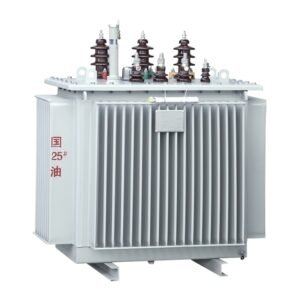
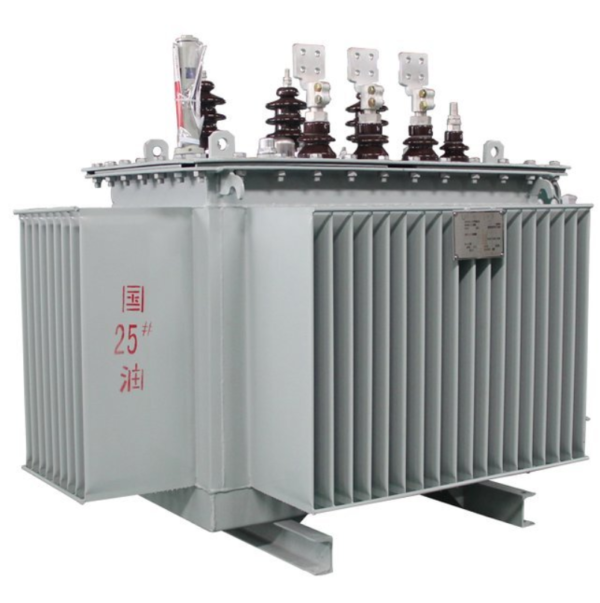
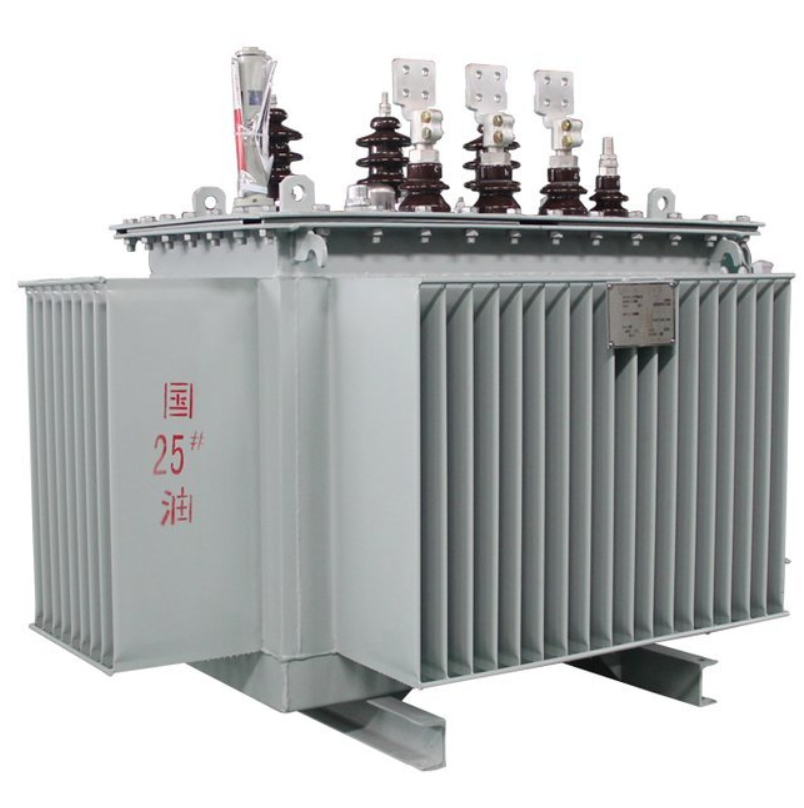
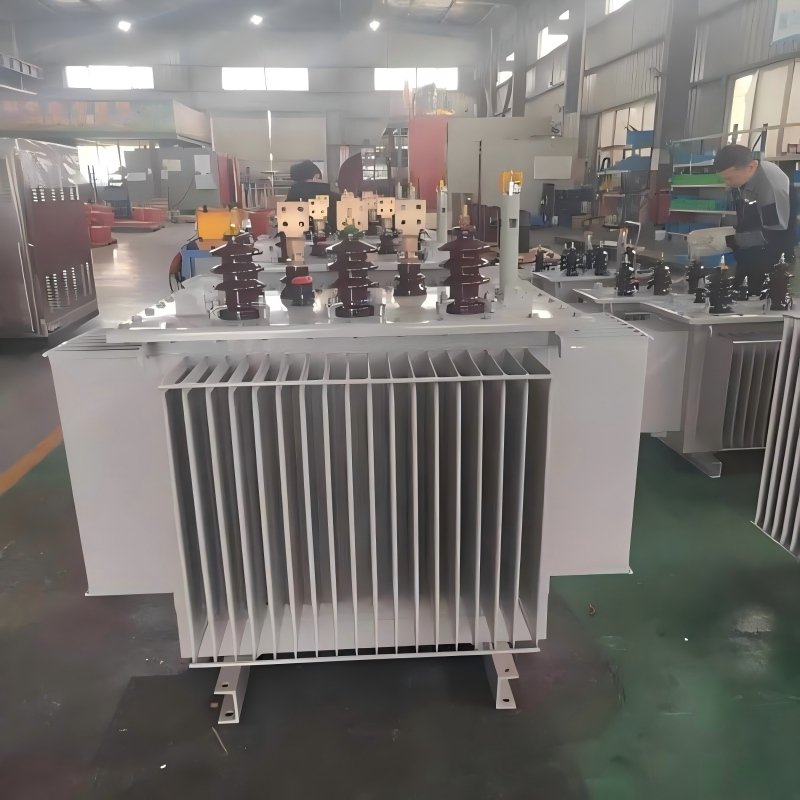
500kVA oil immersed transformer manufactured by QIANLAI ELECTRIC adopts industry-leading technologies and is specially designed for power distribution systems in industrial, commercial and utility sectors.
This three-phase oil-immersed transformer delivers outstanding energy efficiency, reliable power transmission and a long service life, meeting the stringent power application requirements across the globe.
Main technical Parameter
| Rated capacity | 500 KVA |
| Primary voltage | 33KV/35KV/13.2KV/11KV/10KV/6.3KV/6KV(customizable) |
| Tap changer | ±2*2.5/±5 |
| Secondary voltage | 400V/415V/433V/380V(customizable) |
| Vector group | Dyn11/Yzn11/Yyn0 |
| Number of phase | Three phase |
| frequency | 50hz |
| Temperature rise | 65K |
| Short circuit impedance | 4.0% |
| No load loss | Different series(S10,S11,S13,S14),got different loss data |
| Load loss 75ºC | Different series(S10,S11,S13,S14),got different loss data |
| Cooling type | ONAN |
| Oil type | 25#/45# |
| standards | IEC 60076-1 |
Working Principle of 500KVA Oil Immersed Transformers
The working principle of an oil immersed transformer is based on the law of electromagnetic induction. Its core function is to achieve electrical energy transfer and voltage conversion between the high-voltage and low-voltage sides through magnetic coupling of the iron core, while transformer oil serves dual functions of insulation and heat dissipation. The specific working process can be divided into three core steps:
- Primary winding excitation to generate alternating magnetic flux.
When the high-voltage primary winding is connected to an AC power supply, alternating current flows through the winding, which in turn induces alternating magnetic flux in the iron core.The iron core is laminated with high-permeability grain-oriented silicon steel sheets. Its role is to concentrate magnetic flux, reduce magnetic resistance, and guide most of the magnetic flux to close along the iron core. This closed magnetic flux is called main magnetic flux.
- Main magnetic flux coupling to induce electromotive force in the secondary winding
The alternating main magnetic flux passes through both the primary winding and the low-voltage secondary winding simultaneously. According to the mutual inductance principle of electromagnetic induction, the secondary winding will induce an alternating electromotive force from the main magnetic flux.The magnitude of the electromotive force is proportional to the number of winding turns, and its calculation formula is as follows:
U2/U1≈N2/N1
In the formula, U1 and U2 are the primary and secondary voltages respectively, and N1 and N2 are the number of turns of the primary and secondary winding respectively. By designing different turn ratios, voltage boosting or reduction can be achieved (distribution transformers are mostly step-down types, i.e., N1>N2).
- Auxiliary function of transformer oil
The iron core and windings of an oil-immersed transformer are completely immersed in transformer oil, which plays a crucial role:
Insulation function: The insulation performance of transformer oil is far superior to that of air. It can isolate the current paths between winding, between winding and the iron core, and between windings and the oil tank, preventing short circuits and electric discharges.
Heat dissipation function: During operation, the copper loss of winding and iron loss of the iron core are converted into heat. The heat is absorbed by transformer oil. After being heated, the oil transfers heat to the outer wall of the oil tank through natural convection or forced circulation (equipped with radiators and cooling fans) and then dissipates it into the air.
In addition, transformers operate in accordance with the principle of energy conservation. The active power output by the secondary side is approximately equal to the active power input by the primary side (minus minor losses). Therefore, voltage is inversely proportional to current, i.e., I2/I1≈N1/N2, achieving efficient electrical energy transfer.