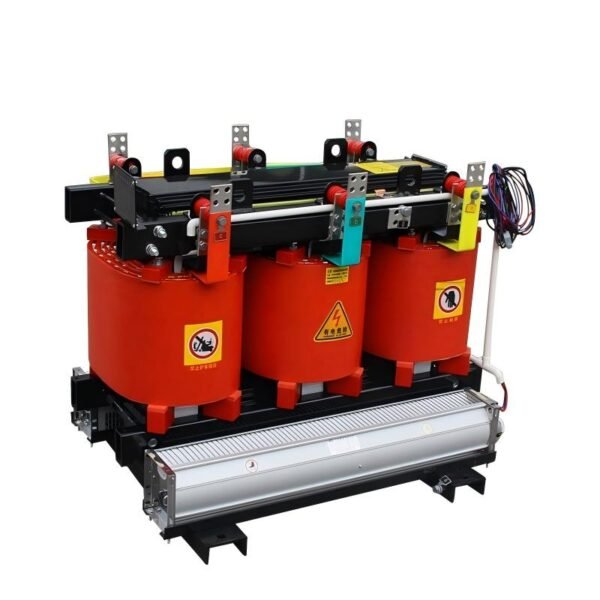
100kVA Dry Type Transformer | High-Efficiency, Safe Power Solution | QIANLAI ELECTRIC
Product Overview: 100kVA Dry Type Transformer
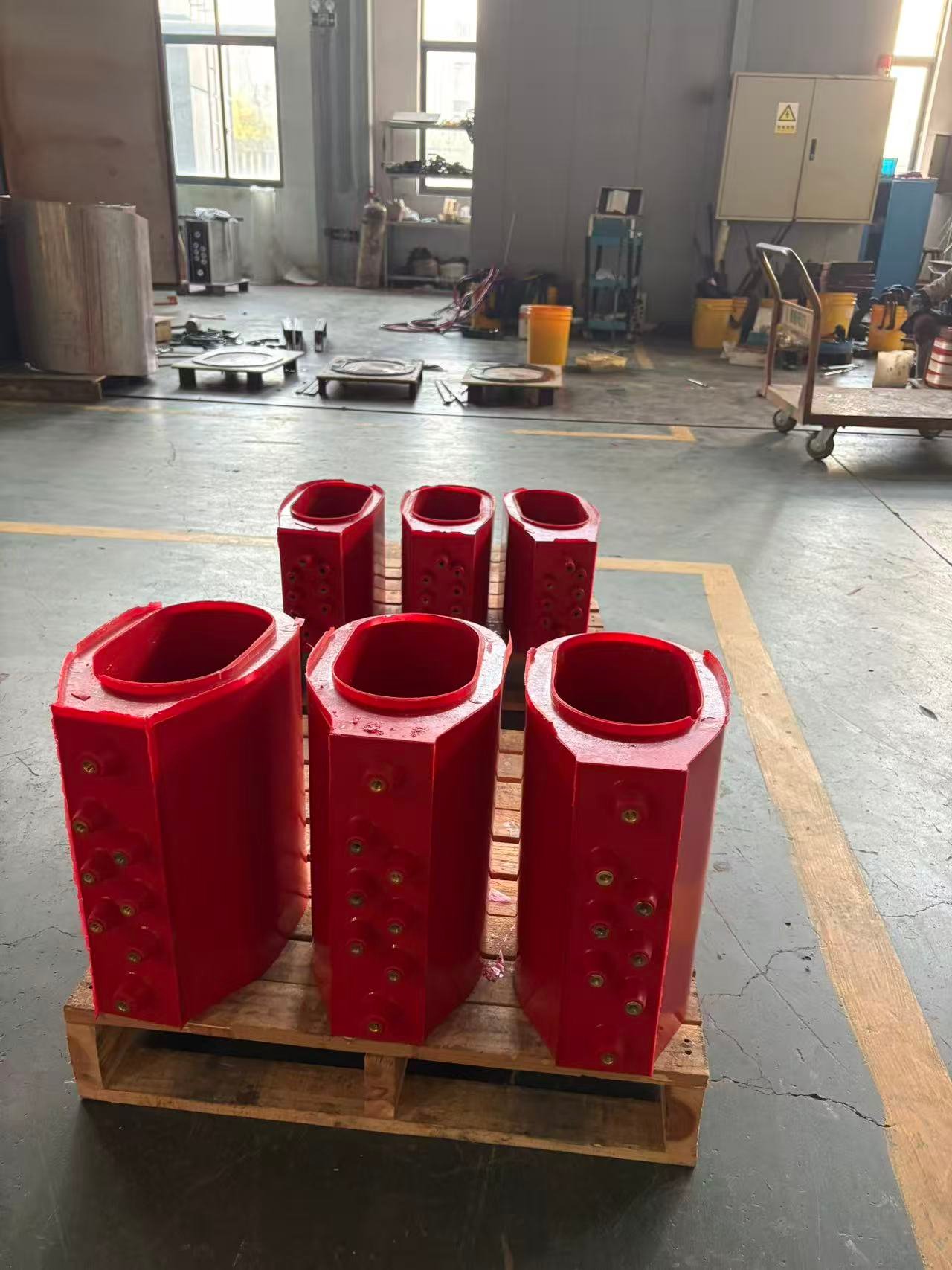
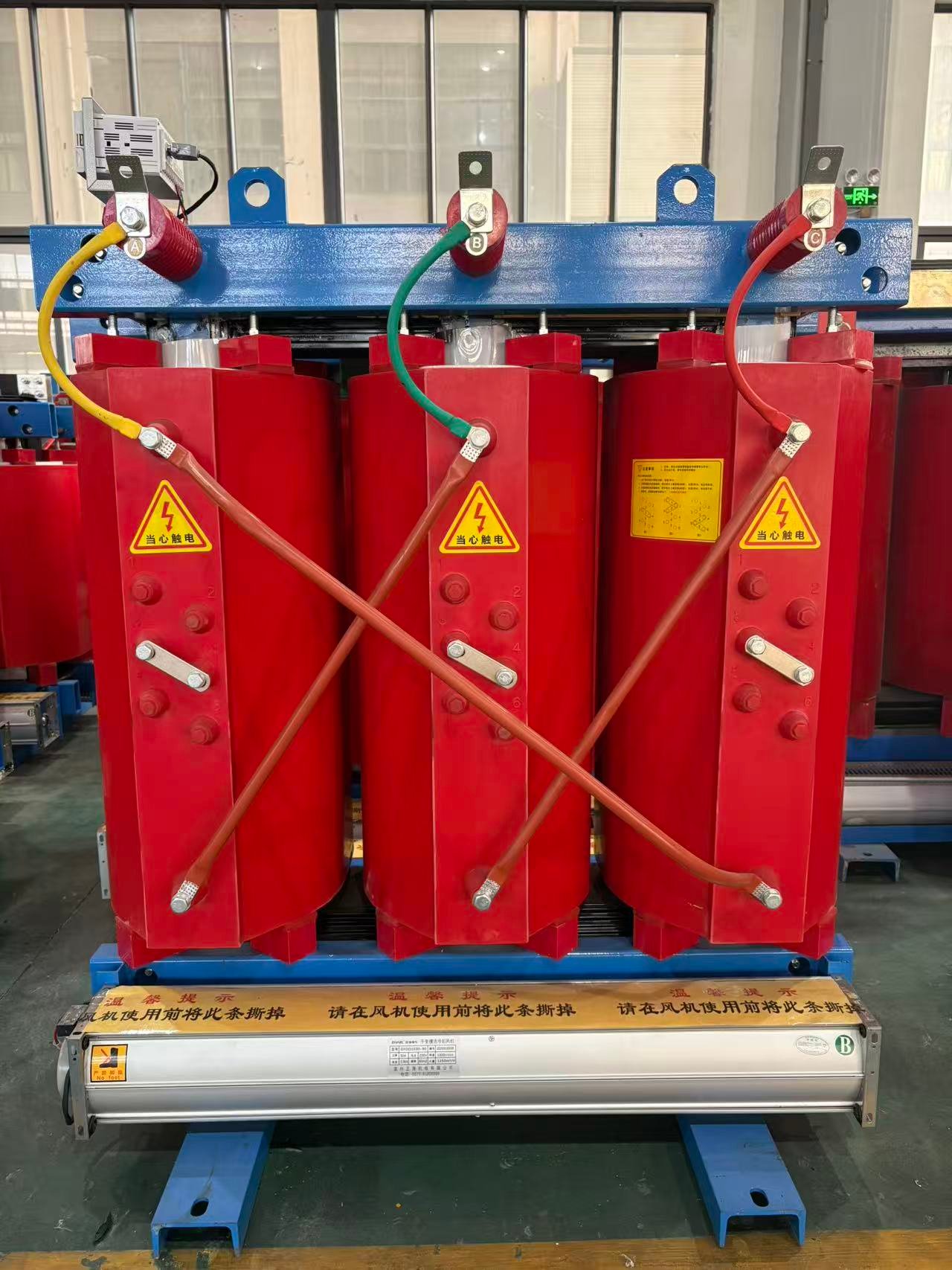
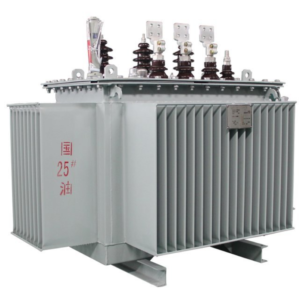
The 100kVA dry type transformer from QIANLAI ELECTRIC is a three-phase power distribution device that relies on air as the cooling medium , eliminating the need for flammable insulating oil. With a rated capacity of 100 kVA—a unit of apparent power encompassing both active and reactive power —it can deliver up to 80kW of real power under typical industrial conditions (assuming a power factor of 0.8). This transformer is tailored for voltage conversion needs, supporting primary voltages ranging from 2.4kV to 34.5kV and secondary voltages of 380/220V, 400/230V, or 480/277V, with customizable options to meet specific project requirements .
SCB10 Series 100kva dry type transformer technical Specifications
| Rated Capacity KVA | Voltage KV | Vector group | No load Loss KW | Load loss at different insulation system tem.KW | No load Current % | Short Circuit Impedance % | ||||
| High voltage | Tapping range | Low voltage | 130ºC(B) (100ºC) | 155ºC(F) (120ºC) | 155ºC(H) (145ºC) | |||||
| 30 | 6 6.3 10 10.5 11 13.2 13.8 15 | ±2*2.5 / ±5 | 0.4 | Dyn11 Yyn0 | 0.19 | 0.670 | 0.710 | 0.760 | 2.0 | 4.0 |
| 50 | 0.27 | 0.940 | 1.00 | 1.07 | 2.0 | |||||
| 80 | 0.37 | 1.29 | 1.38 | 1.48 | 1.5 | |||||
| 100 | 0.40 | 1.48 | 1.57 | 1.69 | 1.5 | |||||
| 125 | 0.47 | 1.74 | 1.85 | 1.98 | 1.3 | |||||
| 160 | 0.54 | 2.00 | 2.13 | 2.28 | 1.3 | |||||
| 200 | 0.62 | 2.37 | 2.53 | 2.71 | 1.1 | |||||
| 250 | 0.72 | 2.59 | 2.76 | 2.69 | 1.1 | |||||
| 315 | 0.88 | 3.27 | 3.47 | 3.73 | 1.0 | |||||
| 400 | 0.98 | 3.75 | 3.99 | 4.28 | 1.0 | |||||
| 500 | 1.16 | 4.59 | 4.88 | 5.23 | 1.0 | |||||
| 630 | 1.34 | 5.53 | 5.88 | 6.29 | 0.85 | |||||
| 800 | 1.52 | 6.55 | 6.96 | 7.46 | 0.85 | 6.0 | ||||
| 1000 | 1.77 | 7.65 | 8.13 | 8.76 | 0.85 | |||||
| 1250 | 2.09 | 9.10 | 9.69 | 10.3 | 0.85 | |||||
| 1600 | 2.45 | 11.0 | 11.7 | 12.5 | 0.85 | |||||
| 2000 | 3.05 | 13.6 | 14.4 | 15.5 | 0.7 | |||||
| 2500 | 3.60 | 16.1 | 17.1 | 18.4 | 0.7 | |||||
Impact of 100kva Dry Type Transformer Connection Groups on Transformer Performance and Applications
The connection group of a dry-type transformer directly determines the voltage phase relationship, winding connection mode, and neutral point grounding characteristics between the high-voltage and low-voltage winding. In turn, it exerts a crucial influence on the transformer’s operational performance, harmonic suppression capability, load adaptability, and application scenarios. The detailed impacts are analyzed as follows:
- Impact on Harmonic Suppression Capability
Harmonic suppression is a core indicator of dry-type transformer operational stability, and the winding connection method specified by the connection group is the key determinant of this capability:
Winding with △ connection (e.g., the high-voltage side of Dyn11) : The delta winding forms a closed zero-sequence circulating current loop. The 3rd harmonic and its multiples (the most common harmonic sources in power grids) are dissipated and offset within the loop, without being transmitted to the power grid on the other side. This significantly reduces grid harmonic pollution and protects electrical equipment.
Therefore, connection groups with △ connection, such as Dyn11, Dd0, and Yd11, have far superior harmonic suppression capabilities compared to those without △ connection.
Winding with full Y connection (e.g., Yyn0) : Without a closed zero-sequence loop, the 3rd harmonic cannot be suppressed and directly superimposes on the voltage waveform, causing voltage distortion. Long-term operation will lead to increased transformer losses, excessive temperature rise, and interference with the normal operation of precision instruments, frequency converters, and other equipment.
- Impact on Load Adaptability
Different connection groups vary greatly in their ability to handle balanced/unbalanced loads, directly determining their suitability for distribution scenarios:
Dyn11 connection group : The low-voltage side adopts yn connection (neutral point led out and grounded). Combined with the harmonic suppression advantage of the high-voltage side △ connection, it has an extremely strong ability to withstand unbalanced loads. Even if the three-phase load current deviates significantly, the neutral point potential will not drift obviously, ensuring stable three-phase voltage output. It is perfectly suitable for scenarios with mixed single-phase loads (e.g., lighting, household appliances) and three-phase loads (e.g., power equipment), such as residential power distribution and commercial complexes.
Yyn0 connection group : Although the neutral point is led out on the low-voltage side, it lacks harmonic suppression capability and has high zero-sequence impedance in Y connection. It is only applicable to occasions with highly balanced three-phase loads (e.g., power supply for small motor groups). In case of large unbalanced loads, the neutral point will drift severely, causing overvoltage on one phase that burns out equipment and undervoltage on another phase that prevents normal operation.
Dd0 connection group : No neutral point is led out, only applicable to three-phase three-wire power supply, and suitable for pure three-phase balanced loads (e.g., large industrial power equipment), unable to meet the power demand of single-phase loads.
- Impact on Grounding Mode and Power Supply System
The connection group determines whether the transformer can provide neutral point grounding, thereby affecting the power supply system (three-phase three-wire/three-phase four-wire):
Connection groups with yn connection (Dyn11, Yyn0) : The neutral point of the low-voltage side can be directly grounded, enabling three-phase four-wire power supply output, which meets the power demand of both three-phase power loads and single-phase lighting loads simultaneously. It is the mainstream choice for civil and commercial power distribution.
Connection groups without neutral point leading out (Dd0, Yd11) : Only three-phase three-wire power supply can be provided, applicable to industrial scenarios that do not require single-phase power supply (e.g., high-voltage motors in factories, large mining equipment).
Yz connection (zigzag connection) : The neutral point grounding stability is far superior to the ordinary yn connection, with extremely low zero-sequence impedance. The single-phase ground fault current can be accurately controlled, making it suitable for high-risk places with strict grounding protection requirements, such as coal mines and subways.
- Impact on Voltage Phase Relationship
The “clock number” of the connection group (e.g., 11, 0) represents the phase difference between the line voltages of the high-voltage and low-voltage sides, which is crucial for parallel operation of multiple transformers and grid connection:
Core requirement for parallel operation : When multiple transformers operate in parallel, their connection groups must be completely consistent. If the phase differences are different (e.g., one is Dyn11 and the other is Yyn0), a huge phase difference circulating current will be generated after parallel connection, burning the transformer windings instantly.
Application value of phase difference : The line voltage on the low-voltage side of the Yd11 connection group leads that on the high-voltage side by 30°, which can be used in occasions requiring phase compensation (e.g., front-end transformers of rectifier units and frequency conversion systems), optimizing power conversion efficiency.
- Impact on Insulation and Losses
△ connection windings : The windings bear line voltage, but the number of winding turns is less than that of Y connection under the same voltage level, reducing the consumption of insulating materials, which can decrease the transformer volume and cost. At the same time, the existence of zero-sequence circulating current will slightly increase the winding copper loss, but the overall loss is still within a reasonable range.
Y connection windings : The windings bear phase voltage (1/√3 of the line voltage), reducing the difficulty of insulation design, and are suitable for occasions with high voltage levels on the high-voltage side (e.g., Yd11 connection group of 110kV-class dry-type transformers).