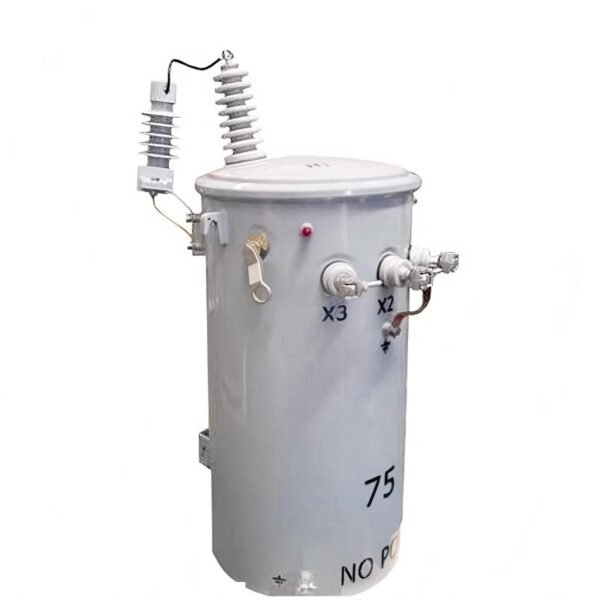
75 kva Single phase transformer/ QIANLAI ELECTRIC
Application
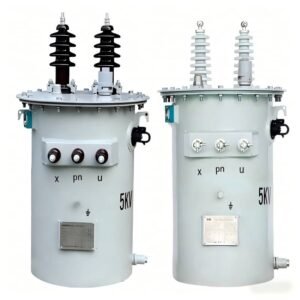
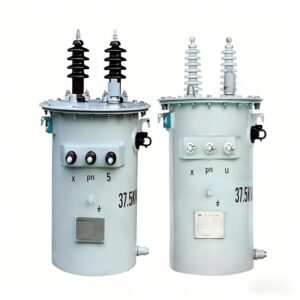
The 75 kva single phase overhead transformer may be used alone for the supply of a single phase load or as one of three units in a bank for the supply of a three phase load. The unit may be direct mounted to a wooden or concrete pole, or cluster mounted on a pole for three phase use.
Our single phase overhead distribution transformer is commonly used in various places including rural areas, remote regions and scattered villages to provide high quality power supply for daily lighting, agricultural production and industrial plants. Aside from these, it is also suitable for the energy saving projects for railway and urban grid.
| Primary voltage | Secondary voltage | ||||||
| Rating (V) | BIL(kV) | 120V/240V 240V/480V 139V/277V 250V/500V | |||||
| 41600-48000 | 75 | ||||||
| 72000-12470 | 95 | ||||||
| 13200-14400 | 125 | ||||||
| 19920-22900 | 150 | ||||||
| 34500 | 200 | ||||||
| capacity (KVA) | primary Rating(KV) | Amorphous core | CRGO core | ||||
| No load loss(W) | Load loss(W) | No load loss(W) | Load loss(W) | ||||
| 3 | 13.8/7.967KV 13.2/7.62KV 11/6.35KV Or customizable | 8 | 45 | 9 | 45 | ||
| 5 | 8 | 75 | 19 | 75 | |||
| 10 | 12 | 120 | 36 | 120 | |||
| 15 | 15 | 195 | 50 | 195 | |||
| 25 | 18 | 290 | 80 | 290 | |||
| 37.5 | 30 | 360 | 105 | 360 | |||
| 50 | 32 | 500 | 135 | 500 | |||
| 75 | 45 | 650 | 190 | 650 | |||
| 100 | 50 | 850 | 210 | 850 | |||
| 167 | 65 | 1410 | 350 | 1410 | |||
Manufacturing Process of 75kVA Single Phase Transformer
A 75kVA single-phase transformer falls into the category of small-capacity distribution transformers. Its production must strictly follow the core process: core processing → winding fabrication → core-and-coil assembly → insulation treatment → final assembly → testing and inspection. Precision control is required at each step to ensure product performance complies with the requirements of national standards (GB/T 1094 series). The detailed process is as follows:
I. Raw Material Inspection and Pre-treatment
Key Material Acceptance
- Silicon steel sheets: Oriented silicon steel sheets (usually grade 30Q120 or 30Q130) are selected. Inspect their thickness tolerance, magnetic induction intensity, and iron loss value to meet low-loss requirements.
- Winding conductors: Choose oxygen-free copper conductors or aluminum conductors according to design specifications. Inspect conductor diameter, resistivity, and insulation layer thickness.
- Insulation materials: Verify the dielectric strength, flame retardancy (for dry-type transformers), and breakdown voltage (for oil-immersed transformers) of insulating paper, pressboard, epoxy resin (for dry-type) or insulating oil (for oil-immersed).
- Auxiliary materials: Check the dimensions and material quality of oil tanks (for oil-immersed), enclosures (for dry-type), terminals, and seals.
Material Pre-treatment
- Conduct deburring, cleaning and dryingon silicon steel sheets to remove surface oil stains and oxide layers, avoiding eddy current loss after lamination.
- Perform pre-dryingon insulating paper and pressboard to control moisture content ≤ 0.5%, preventing insulation performance degradation in subsequent processes.
- Straighten and level conductors, and remove surface oxide films.
II. Core Processing (Key Process)
Single-phase transformer cores mostly adopt shell-type or core-type structures, and the 75kVA specification is dominated by core-type structures. The process is as follows:
- Silicon steel sheet cutting: Cut silicon steel sheets using CNC shears or slitting lines according to the dimensions of core columns and yokes, ensuring dimensional deviation ≤ ±0.2mm.
- Core lamination: Adopt the staggered lamination method(seams of silicon steel sheets are staggered layer by layer), complete lamination manually or with semi-automatic laminators, and control the stacking factor ≥ 0.96 (the higher the factor, the better the core permeability and the lower the loss).
- Core clamping and curing: Clamp and fix the laminated core with steel belts or clamps. Cores of dry-type transformers need to be coated with insulating paint for curing, while cores of oil-immersed transformers can directly proceed to the next step. After lamination, test the no-load loss and exciting current of the core; re-laminate if unqualified.
III. Winding Fabrication
Windings are divided into high-voltage windings and low-voltage windings. 75kVA single-phase transformers usually adopt concentric winding (low-voltage windings are close to the core, and high-voltage windings are sleeved on the outside):
- Winding mold manufacturing: Customize winding molds according to the inner diameter, outer diameter and number of turns of windings to ensure accurate winding dimensions after fabrication.
- Winding fabrication
- Low-voltage windings: Use conductors with larger cross-sections, wind them outside the core columns, controluniform winding tension during fabrication to avoid damage to conductor insulation layers.
- High-voltage windings: Use conductors with smaller cross-sections, wind them outside the low-voltage windings, place insulating paper between layers, and install insulating end rings at winding ends.
- Count the number of turns in real time during winding to ensure turn deviation ≤ ±1 turn. After winding, wrap the winding ends with insulating tape.
- Winding pre-testing: Measure the DC resistance of windings to check for open circuits or short circuits; disassemble and rewind if unqualified.
IV. Core-and-Coil Assembly
Assembling the core and windings into a core-and-coil assembly is a key step that determines the insulation performance of the transformer:
- Insulator assembly: Install insulation cylindersbetween core columns and low-voltage windings, and interphase insulation boards between high-voltage and low-voltage windings to ensure insulation distances meet design requirements.
- Winding sleeving: Use a hydraulic press to slowly sleeve the high-voltage windings outside the low-voltage windings, avoiding scratching the insulation layers during the sleeving process.
- Lead welding and fixing: Weld the leads of high-voltage and low-voltage windings to terminals, perform insulation treatment on welding joints, and fix the leads with cable ties to prevent lead shaking during operation.
- Core-and-coil insulation wrapping: Wrap the entire core-and-coil assembly with insulating tape. Dry-type transformersneed additional wrapping with epoxy resin glass fiber tape to enhance insulation strength.
V. Insulation Treatment (Two Processes for Dry-Type/Oil-Immersed)
1. Insulation Treatment for 75kVA Dry-Type Single-Phase Transformer
Adopt the Vacuum Pressure Impregnation (VPI) process to improve the moisture resistance and heat resistance of winding insulation:
- Put the core-and-coil assembly into the impregnation tank, evacuate to -0.09MPa, maintain for 1–2 hours to remove air and moisture inside the core-and-coil assembly.
- Inject epoxy resin impregnating varnish, pressurize to 0.3–0.5MPa, maintain for 2–3 hours to ensure the varnish fully penetrates the winding gaps.
- Take out the core-and-coil assembly, put it into a drying oven, dry and cure at 120–150℃ for 8–10 hours to remove excess varnish.
- After curing, clean residual varnish slag on the surface of the core-and-coil assembly, and check whether the insulation layer is uniform and free of bubbles.
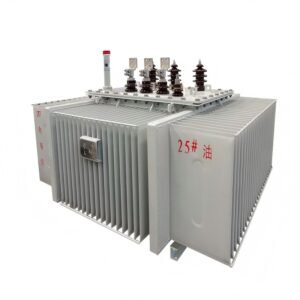
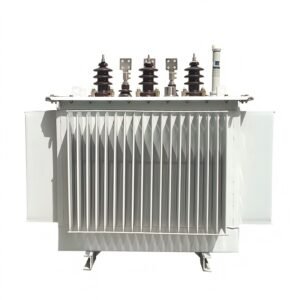
2. Insulation Treatment for 75kVA Oil-Immersed Single-Phase Transformer
- Put the core-and-coil assembly into a vacuum drying tank for vacuum drying(temperature 100–110℃, vacuum degree -0.09MPa, time 8–12 hours) to completely remove moisture from insulating materials.
- Install the core-and-coil assembly into the oil tank, inject qualified transformer oil, and maintain a vacuum state during oil injection to avoid air mixing into the oil.
- Let it stand for 24 hours after oil injection to allow the oil to fully penetrate all parts of the core-and-coil assembly.
VI. Final Assembly
- Dry-type transformers: Install the treated core-and-coil assembly into the metal enclosure, mount temperature controllers, fans (if forced air cooling is required) and junction boxes, fix the core-and-coil assembly to prevent shaking, and add grounding terminals to the enclosure.
- Oil-immersed transformers: After completing oil injection and standing, install accessories such as oil level gauges, thermometers, breathers and oil drain valves, and seal the tank joints to prevent oil leakage.
- Tighten all bolts to ensure no looseness at connection points, and mark clear voltage class labels on terminals.
VII. Testing and Inspection (Mandatory Process Before Delivery)
All 75kVA single-phase transformers must pass the following tests before delivery:
Routine tests (mandatory)
- Winding DC resistance measurement: Check the resistance balance (for single-phase transformers, test the resistance values of high-voltage and low-voltage windings).
- Insulation resistance and absorption ratio measurement: Use a megger to test the insulation resistance between windings and ground, and between high-voltage and low-voltage windings. The insulation resistance of dry-type transformers ≥ 1000MΩ, and that of oil-immersed transformers ≥ 300MΩ.
- Withstand voltage test: Apply power frequency withstand voltage to windings for 1 minute (e.g., for 10kV class transformers, the withstand voltage between high-voltage windings and ground is 28kV) without breakdown or flashover.
- No-load test: Apply rated voltage, measure no-load current and no-load loss, which must comply with design values.
- Load test: Apply rated current, measure load loss and impedance voltage.
- Type tests(sampling test as needed): Including temperature rise test and short-circuit withstand capability test, to verify the stability of the transformer during long-term high-load operation.
VIII. Packaging and Delivery
- Perform surface cleaning and rust-proof treatment on qualified products. Dry-type transformers adopt moisture-proof packaging, and oil-immersed transformers need to recheck the sealing status.
- Attach product qualification certificates, test reports, operation manuals and warranty cards.
- Ensure secure transportation fixation to prevent core-and-coil displacement or accessory damage during transportation.